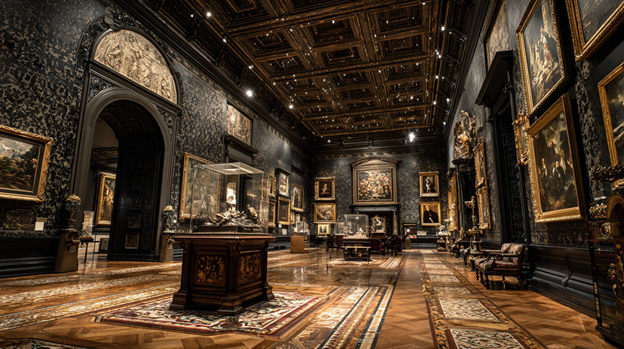
Although the United States has thousands of museums, only a few dominate in size, influence, and attendance. These institutions lead the charge in shaping how visitors experience American art, history, and science.
If you’d like to visit any of America’s biggest museums, look out for opening hours at locations like the Metropolitan Museum of Art, the National Gallery of Art, the Museum of Modern Art, and the American Museum of Natural History. Let’s see the unique impacts of these centers and how they contribute to the nation’s art and cultural heritage.
The Metropolitan Museum of Art
The Metropolitan Museum of Art (fondly called The Met) in New York is the most visited museum in the United States. Recent data shows it attracted about 5.7 to 5.9 million visitors annually in 2024–2025. These figures also position it among the top museums in the world.
The Met holds over 2 million works that span 5,000 years of art history. Visitors here have access to ancient hieroglyphics from ancient Egypt alongside modern American paintings on each visit. That makes little wonder why this center makes a broad appeal, attracting a wide range of visitors, from tourists to students, and local visitors all-year long.
The National Gallery of Art
The National Gallery of Art in Washington, D.C. recorded nearly 3.9 million visitors in a recent year, placing it among the most visited museums in the country. Unlike many similar institutions, the National Gallery of Art is federally funded and offers free admission.
The collection here includes European masterpieces, American art, and rotating exhibitions that draw international attention. And that’s only the tip of the iceberg of wonders at the National Gallery of Art.
It splits into two buildings linked by an underground tunnel. While one focuses on classical works, the other highlights modern and contemporary pieces. Thanks to public funding driving its operations, the National Gallery of Art permits consistent access to notable relics without commercial pressure.
The Museum of Modern Art
Next is the Museum of Modern Art, commonly known as MoMA. It is one of the most influential modern art institutions in the world and attracts around 2.6 to 2.7 million visitors annually in recent reporting cycles.
MoMA focuses on modern and contemporary works, including painting, photography, film, design, and digital art. Visitors here can also expect to explore globally recognized works like “Starry Night” by Vincent van Gogh and pieces by Pablo Picasso.
At its core, what makes MoMA unique is its influence on modern taste. Many exhibitions at this museum define trends in contemporary art just before they spread globally. It also hosts one of the most important film archives in the world, playing a major role in film and media culture.
The American Museum of Natural History
The American Museum of Natural History in New York attracts roughly 5 million visitors annually, placing it among the United States’ most visited museums. Unlike art-focused institutions, this center is focused on science, evolution, space, and anthropology.
It is renowned for its dinosaur fossils, planetarium, and large-scale scientific exhibits. These features help it play a major educational role, welcoming millions of students annually in a way that shapes scientific learning across the country.
Why These Four Museums Dominate
These museums aren’t random; each dominates a different cultural category that shapes global culture and learning. While the Met represents global art history, the National Gallery represents public cultural access. MoMA defines modern artistic direction, while the American Museum of Natural History represents science education.
Together, they cover the full spectrum of museum experience in the United States. Of course, there’s a direct link between their scale and national dominance. Each center attracts millions of visitors annually, making them leading venues for art, history, and knowledge lovers within and outside the nation.
Conclusion
The biggest four museums in the United States remain central to global culture in 2026. Together, they shape how millions of people experience art, history, and science every year. Their influence isn’t just American; it is global, cultural, and continuously evolving with each generation of visitors.