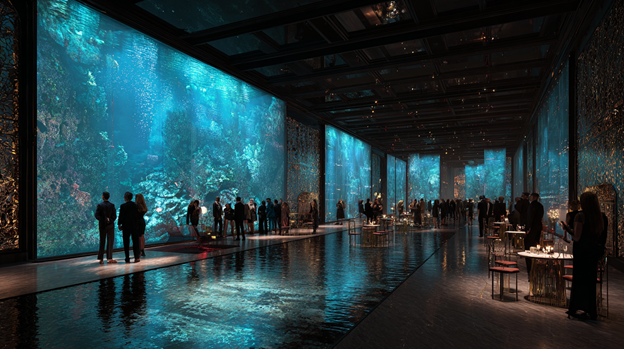
Museums and online casinos may look unrelated on the surface. However, both industries compete for the same type of audience, one that values experience, stimulation, and decision-based engagement.
Beyond that, both industries overlap in the demographics, digital behavior, and spending habits of their end visitors. Let’s explore the unique connection between art, culture, and high stakes, especially among their followership.
Both Sectors Thrive on High Engagement
Major museums attract millions of visitors annually. For instance, the Metropolitan Museum of Art alone recorded about 5.7 million visitors in a recent year, topping US attendance rankings. Other major institutions like The National Gallery of Art, the American Museum of Natural History, and the Museum of Modern Art similarly welcome millions of guests each year.
These numbers matter because museum visitors are not passive consumers; they actively explore, make choices, and spend extended time engaging with curated environments. This level of immersion is something that top online casinos intentionally mirror.
For example, when exploring a specific offer like the Beep Beep no-deposit bonus featured at https://pl.polskiesloty.com/beep-beep-bonus-bez-depozytu/, players navigate through games, make rapid decisions, and react to complex visual and emotional stimuli. In both museums and digital casinos, the environment is crafted to reward sustained attention and active engagement rather than passive viewing.
How Decision-Based Experiences Create Shared Psychology
Art theaters, cultural heritages, and casinos commonly rely on structured decision-making. While museum visitors choose paths, exhibits, and pacing, casino users choose bets, games, and timing. Both industries demonstrate this shared cognitive pattern that requires continuous micro-decisions.
Research in visitor behavior shows museum guests often fall into distinct engagement types, ranging from fast “samplers” to deep “explorers,” depending on how they navigate exhibitions.
Casino users demonstrate a similar segmentation. While some users play briefly, others stay longer and engage deeply with multiple game types.
Both Industries Thrive on Immersive Design
Modern museums invest heavily in immersive exhibition design. We’re talking about all the lighting, spatial layout, and digital installations that help to control attention flow. Thankfully, studies of museum environments have shown that physical space and accessibility strongly influence how long museum visitors engage with exhibits.
Online casinos use similar principles in virtual spaces. Bright visuals, sound cues, animation pacing, and interface feedback all work to guide user behavior online. That way, both industries leverage environments that reduce friction and increase engagement time. Both have a unified goal that sustains attention within the system.
Emotional Stimulation Is Central to Both Experiences
Museums and casinos both rely on emotional variation. The former alternate between curiosity, reflection, and surprise. In museum settings, exhibits are structured to create narrative flow and emotional peaks.
On the flip side, casinos alternate between anticipation, reward, and loss. Although the emotional cycle is faster here, the structure is similar.
Lastly, both environments leverage unpredictability. For museum visitors, their visit thrives on unexpected and bemusing discoveries. In casinos, the fun comes from unpredictable outcomes. Such unpredictability keeps users engaged in both spaces longer than in predictable experiences.
Digital Access Has Merged the Audiences
Both museums and casinos heavily leverage digital spaces. Museums now record tens of millions of annual website visits, with a significant share of traffic coming from international users perusing collections online.
Online casinos, meanwhile, operate almost entirely in virtual environments, often optimized for mobile-first interactions. Such provisions create overlap in user behavior as both audiences accustom themselves to screen-based engagement, interactive browsing, and short attention cycles.
And what is the end result of such partnership? A shared digital audience that transverses cultural content and entertainment platforms.
High-Income and Experience-Driven Users Overlap
Both sectors also attract similar spending profiles. Visitors at art galleries and cultural heritage sites tend to be experience-focused consumers who value travel, culture, and leisure activities. Similarly, casino visitors often prioritize entertainment value, excitement, and interactive engagement.
It is little wonder that high-income and urban audiences are particularly likely to engage with both sectors. They attend exhibitions, travel for cultural experiences, and also participate in online entertainment platforms. Such overlap is reinforced by global tourism trends, where cities with major museums also host casino hubs or online gambling markets.
Time Investment Patterns Are Surprisingly Similar
Beyond financial gains, museums and casinos both compete for users’ time. A museum visit can last several hours, while casino sessions can extend over long periods depending on engagement.
Both environments are crafted to hold attention without forcing it. Visitors must opt to stay.
That’s not all. Research on museum behavior shows that movement patterns aren’t linear. Visitors often revisit exhibits and spend uneven time across spaces, being influenced more by accessibility and interest rather than structure.
Similar retention mechanics are prevalent/common in casino platforms. Gambling sites leverage game variety and progression systems, which work in creating a shared challenge for sustaining attention across time.
Conclusion
Museums and online casinos may appear unrelated, but they share core audience behaviors. Art and high-stakes environment both attract decision-driven users who value engagement, immersion, and emotional stimulation.
Both rely on curated environments that guide attention, just as both increasingly operate in digital spaces that reinforce similar interaction patterns. Today, the shared audience is not defined by interest alone; it is defined by how people experience environments that demand attention, choice, and emotional response. Here is where art and high stakes meet.